A useful map of the instrument
Begin with a single played note. A felt-covered hammer strikes one string or a group of strings. Their vibration reaches a bridge, which couples that motion into the soundboard. The board moves air much more effectively than the narrow strings could alone. At the same time, the strings pull continuously against a supporting system of plate, rim, beams and pinblock. These are related paths, but they are not identical: carrying tension and radiating sound are different jobs.
This distinction prevents a common misunderstanding. The cast-iron plate is not the piano’s loudspeaker, and the soundboard is not a simple amplifier with an independent power source. The board redistributes the energy supplied by the player. Its mass, stiffness, damping and connection to the surrounding structure influence how that energy is shared and how quickly different parts of a note decay.
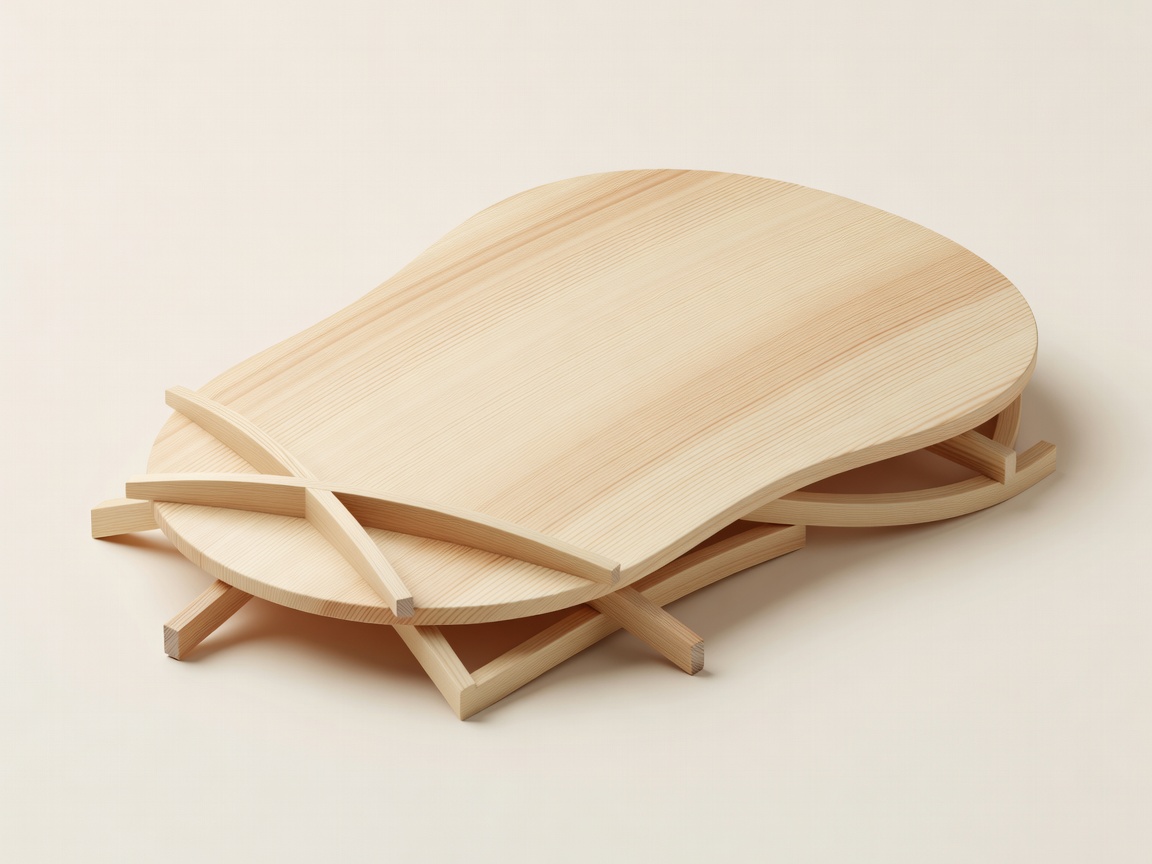
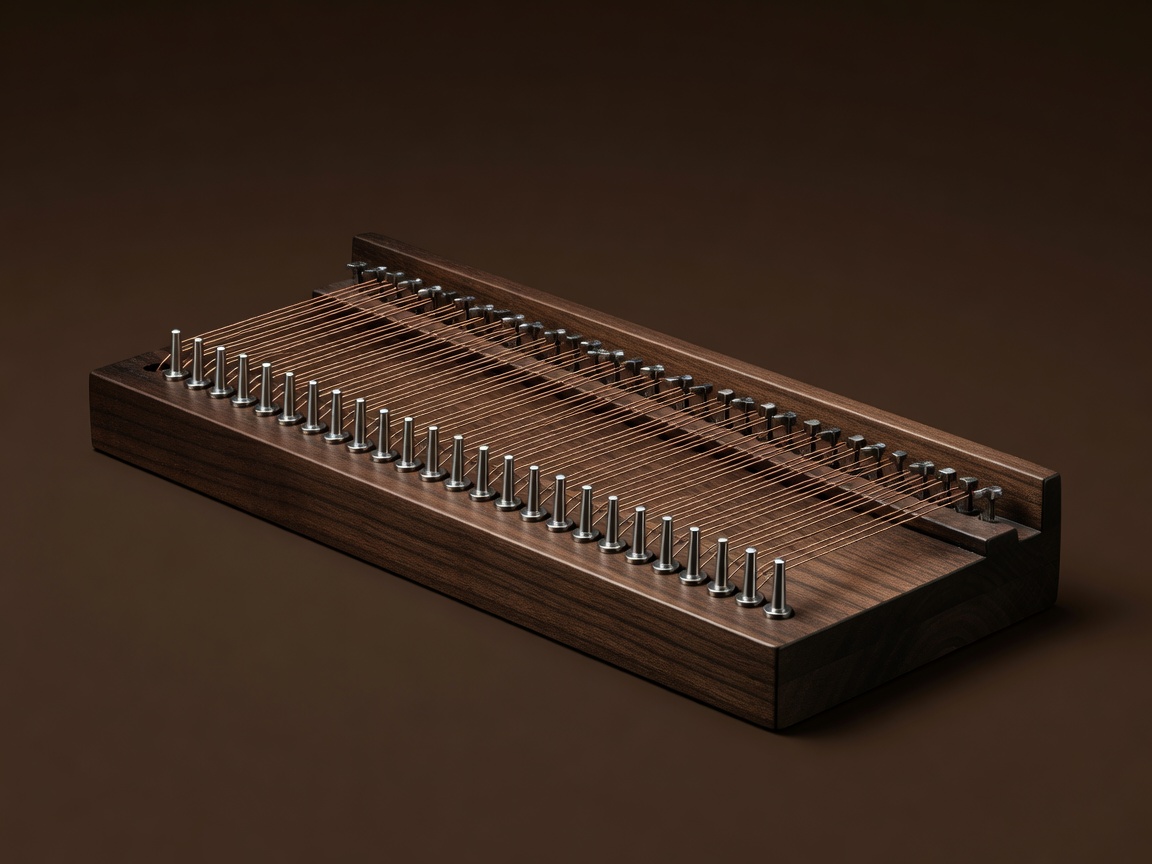
The rim and plate establish the frame
Many modern grand-piano rims are formed from laminated hardwood layers bent and bonded into a curved outline. Manufacturers make different choices about species, thickness, internal bracing and joints. A rigid perimeter can help maintain geometry, but stiffness alone does not describe the whole instrument. Construction also has to accommodate manufacturing tolerances, long-term service and the environment in which the piano will live.
The cast plate carries much of the string load and helps keep the scale geometry stable. Tuning pins sit in a laminated wooden pinblock, whose grip must support controlled tuning adjustments. A piano that looks beautifully polished may still have tuning-stability problems beneath the surface. Assessing those parts requires a technician; a photograph of the plate or a brand name cannot establish their condition.
The soundboard is an engineered wooden assembly
Spruce is widely used because its stiffness relative to mass makes it useful for soundboards. Grain direction matters, as do board thickness, ribs and bridge placement. Many boards are built with crown, a shallow curved profile associated with their intended structural loading. Crown is not a single visual score of quality, however. The loaded board, its connections and the maker’s design must be considered together.
Wood exchanges moisture with the surrounding air. Seasonal changes can affect tuning, dimensions and stresses. This is why stable conditions and sensible placement matter more than romantic descriptions of “aged tonewood.” A crack can be significant, but its presence alone does not tell you whether a board is acoustically ineffective. Loose ribs, bridge damage and unwanted noises need their own investigation.
Strings and bridges shape the scale
“Scale design” includes more than the overall length of a piano. Speaking lengths, wire diameters, tension choices, winding and the transition between string groups all contribute. Bass strings use wound construction to obtain useful mass without the impractical stiffness of an equally heavy solid wire. The resulting system is a compromise among pitch, durability, inharmonicity and tonal continuity.
Bridges locate the string terminations and transfer vibrational energy. Their shape, fit and pinning matter. Changes in bridge condition can affect clarity, stability or unwanted noises, but diagnosis is not a listening guessing game. The same audible symptom can have several causes. Avoid treating a buzz as permission to tighten screws or apply adhesive without professional inspection.
Handcraft is a sequence of judgments
Handcrafted does not mean that every component is made without machinery. Accurate machining, controlled materials and patient hand fitting can coexist. The meaningful question is where skilled judgment enters the process: selecting and fitting parts, checking bearing, preparing hammers, regulating the action and listening during final preparation. Two instruments of the same model can still invite different musical responses.
For historical perspective, Bartolomeo Cristofori’s surviving instruments show how early piano design differed from the modern concert grand. Later makers developed stronger frames and different string arrangements as musical demands changed. Today, Steinway & Sons, Bösendorfer, C. Bechstein, Fazioli and Yamaha publish descriptions of distinct approaches. Treat those as maker accounts, not a neutral ranking. Your next useful chapter is the action that connects your fingers to this resonant body.
Sources and further reading
The Metropolitan Museum of Art holds a Cristofori piano dated 1720. The Royal Collection Trust provides historical instrument records. For current construction descriptions, compare Steinway & Sons, Bösendorfer, C. Bechstein, Fazioli and Yamaha. Arthur H. Benade’s Fundamentals of Musical Acoustics supplies broader physical context. Manufacturer claims should always be read alongside independent inspection and listening.